A First Rural Run After a Week of Rain
Plan a first rural run after a week of rain with clear checks for pooled water, swollen crossings and slippery ground, so you can choose a sensible route.
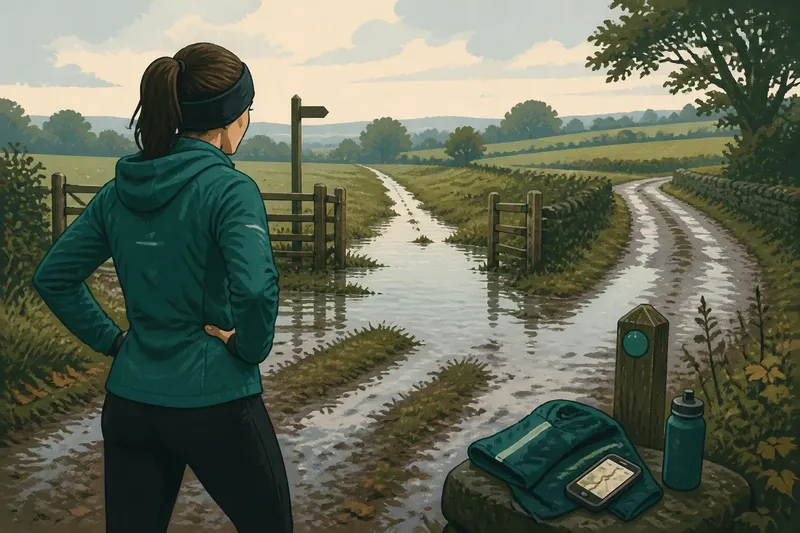
The lane outside the village looks harmless from the kitchen window, but the footpath beyond the stile has been taking rain all week. For a first rural run after a week of rain, pay particular attention to pooled water, swollen crossings and the way the ground changes beneath your feet.
Where is water likely to linger?
Rain drains unevenly. A sheltered hollow may stay wet after an exposed lane has dried, while a woodland path beneath dense branches can remain slick. Low points, narrow dips, field gateways and paths beside ditches or streams are useful places to watch, though none tells you exactly what conditions will be like.
Before setting off, check a local forecast for the broad weather picture, then treat it as context rather than a report on a particular path. Recent rain can leave a familiar route looking and behaving differently, especially where water collects or flows across the ground.
Choose a familiar loop or an out-and-back with an easy way to shorten it. Mark a junction where you could turn towards a surfaced lane or head back; if you use a phone, save the map for offline use in case the signal drops.
How should you assess a crossing after rain?
A beck, ditch or small bridge deserves a fresh look after heavy rain. Water may have reached the path, debris may have collected, or the approach may be soft. Do not assume a crossing is passable because it was clear on your last visit.
Watch for water moving across the route, debris caught against a gate or bank, and edges softened by runoff. If you cannot see a firm, safe way through, do not step into the water to test its depth. Turn back or use a known alternative.
Keep to public rights of way and follow any signs or temporary closures. If a route is blocked or a crossing seems unsafe, choose another way rather than trying to force a passage.
What should you check on the first stretch?
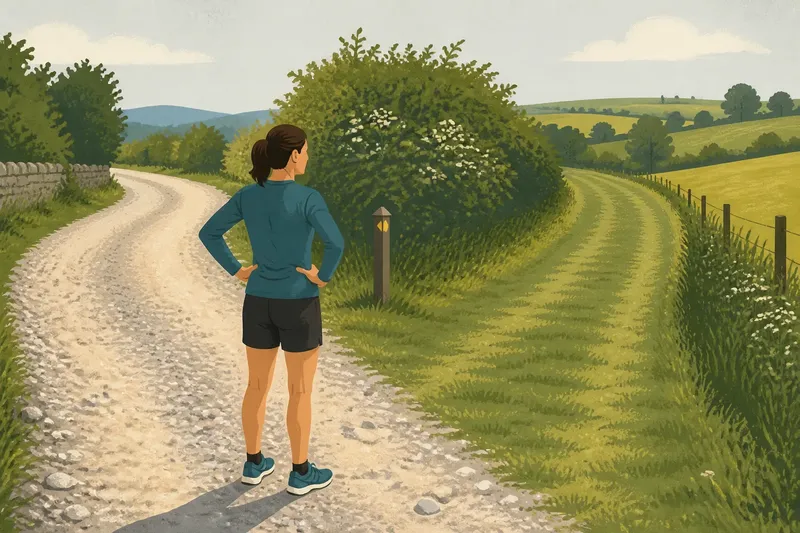
Start easily and notice how the surface responds. Look for water sitting in hollows, fresh ruts, washed gravel, slick leaves and mud that clings to your shoes. Pay particular attention where a hard lane meets a muddy track: wet clay can be slippery even when the gravel beside it feels firm.
Use these observations to decide what to do next:
- If a puddle hides the surface beneath it, take a visible firm edge if one is safe; otherwise turn back or use another route.
- If water is flowing across the path, do not enter it; return the way you came or choose a known alternative.
- If the ground sinks, drags at your shoes or leaves deep impressions, switch to a firmer route or shorten the run.
- If leaves cover a rut or loose stones, slow to a walk until the footing is visible; if you still cannot judge it, change course.
- If a slope feels slick underfoot, walk back on a line you can see; if that is not secure, turn around and retrace your route.
- If a bridge or gateway approach is soft or damaged, avoid the crossing and take another path; if there is no safe alternative, return to the start.
What questions come up after heavy rain?
Should I run through a shallow-looking puddle?
Only if you can see the surface and are confident it is firm. If the water hides the footing, use a clear, secure edge or change course.
Is a country lane always the safer alternative?
No. Wet leaves, mud tracked by vehicles and poor visibility can make a lane difficult too. Choose a stretch with a clear view of traffic and room to move aside, and walk if that feels safer.
When should I turn back?
Turn back if water blocks the path, the ground slips underfoot or you cannot see a safe way across. Doing so while the route behind remains clear is simpler than waiting for conditions to become harder to judge.
Can I wear my usual shoes?
That depends on how they grip the surfaces on your route. If you are unsure, choose a shorter familiar outing with a firm alternative rather than relying on shoes to make uncertain ground manageable.
How do you make the route easy to shorten?
Choose a loop near a village, a short out-and-back or a route with a clear junction where you can head home. Keep a phone secure and the map available offline; for a quiet route, tell someone your general plan. Take a light layer suited to a cool, damp return.
Imagine you planned a loop that crosses a low field before following a lane home. At the field entrance, you see water pooled across the path and cannot make out a firm edge. You turn round, take the lane in both directions and finish with a shorter run; the observable result is that you avoid the hidden crossing, though the route is less varied.
Soft ground can take more effort than its distance suggests. If your footing worsens, shorten the outing before tiredness makes it harder to choose carefully.
What should you note when you get back?
Record specific observations on your phone or map: where water pooled, whether a crossing was clear and which path stayed firm. “Soft at the lower gate” is more useful for your next outing than “very muddy”. Conditions can change, so treat the note as a prompt to look again, not a promise about what you will find.
Brush mud from shoes and let wet kit air in a ventilated place, away from direct heat. Where you have passed through muddy ground, clean footwear before visiting another trail or field if local land-management guidance recommends it; check the relevant local advice rather than assuming one rule applies everywhere.
For a first rural run after a week of rain, the most useful preparation is knowing where water could interrupt the route and deciding in advance what you will do if it does. A brief note about the crossing or hollow that turned you back can help you choose a better starting point next time.