Gravel Lane or Mown Track: Reading Two Rural Surfaces
Gravel lane or mown track? Learn to read texture, footing and effort so you can choose a countryside route that suits the run you have in mind.
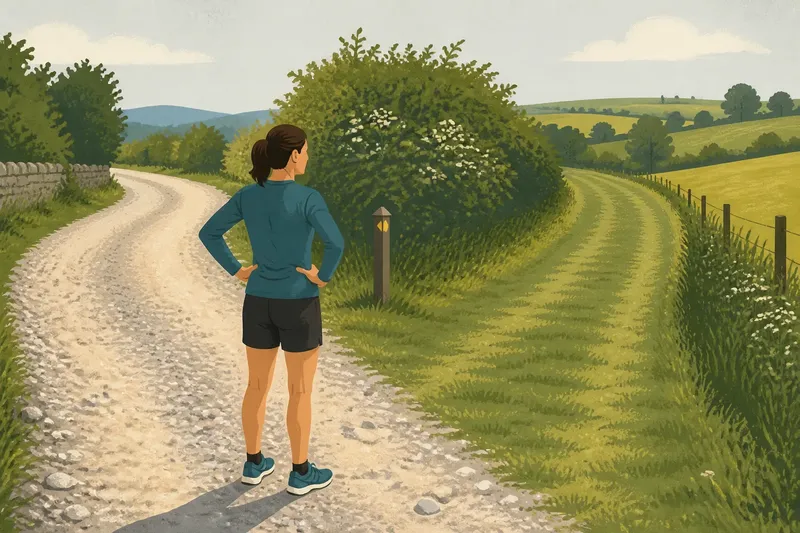
At the first bend, a pale gravel lane branches from a narrow strip of freshly cut grass. If you are weighing up gravel lane or mown track for a run, the choice is less about which looks easier and more about how each surface asks you to move. One offers a defined, often firm line; the other can feel softer, narrower and more variable underfoot.
Imagine Sam, a runner planning an easy outing after several busy days. The aim is not to chase a pace but to enjoy a steady loop and return with enough energy for the rest of the afternoon. At the fork, Sam pauses to read the ground rather than choosing by appearance alone.
What does the gravel lane tell you?
Gravel is not one uniform surface. A lane may be tightly packed and smooth, with fine grit pressed into the base, or it may have loose stones scattered over a harder layer. The difference changes the feel: compact gravel tends to give a predictable foothold, while rolling stones can shift beneath a landing and call for a more attentive stride.
Sam looks along the lane, not just at the first few steps. The centre appears firm, while the edges hold deeper loose grit. That suggests a route where the usable line is broad enough to adjust, but the margins may feel less settled.
On gravel, listen and notice how the foot meets the ground. A crisp crunch may simply be surface noise; a sliding sensation is more useful information. Shortening the stride and easing the pace can make it easier to respond to small changes in texture without forcing a particular rhythm.
Choose gravel when a clearer, more continuous running line suits the outing, provided the stones feel stable to you. Keep an eye on the surface as it changes around bends, gates and drainage dips.
What changes on a mown track?
A mown track can look like a smooth green ribbon, yet the cut grass may conceal uneven ground. The mower follows the shape of the field, not a runner’s preferred footing, so shallow ruts, small hollows and tufts can remain beneath the clipped surface. Grass also softens the sound of each step, making changes in firmness less obvious at a glance.
Sam walks a few strides onto the track and notices that the grass is short but the ground feels springy in one patch and hard in another. The line narrows where vegetation presses in from the sides. That is enough to suggest a more variable surface, even though it looks inviting from the fork.
On a mown track, let comfort set the pace. A relaxed stride and a little extra attention to the ground can suit an easy run, especially where the route is visible and uncomplicated. If the cut strip becomes rutted, overgrown or difficult to follow, turning back or taking a more suitable route is a sensible choice.
Choose the grass track for a softer, quieter feel only when its actual footing matches what you want that day. The colour of the surface cannot tell you how even it is.
How should Sam make the choice?
Sam’s first preference is a calm run with little need to watch every footfall. The gravel lane looks more consistent through the bend, so Sam starts there at an easy pace. After a short stretch, the stones become looser and the centre line narrows; the lane is still usable, but it now asks for more attention than the outing calls for.
At a safe point, Sam pauses and reassesses rather than trying to preserve the original choice. The mown track is nearby and its surface can be viewed clearly from the entrance. Sam walks onto it, checks a few steps for hidden dips, and finds a broad, firm section that feels comfortable.
Sam follows the track at an unhurried pace, keeping the stride light and turning back when the mown line reaches a rougher patch. The result is not a faster or better run in any universal sense; it is an outing that fits the day’s preference for a gentler, less demanding stretch. Had the grass felt uneven, the gravel lane—or another route—would have remained the better option.
This invented situation shows why choosing a surface need not be a once-only decision. A route can change underfoot, and a runner can change plans in response.
Which surface suits a particular outing?
Think first about the experience you want, then compare it with what you can see and feel at the entrance. A gravel lane may suit you if you prefer a defined line and can find a section with settled stones. A mown track may appeal if you want a quieter, softer-feeling stretch and the clipped ground looks even enough for comfortable running.
Other details may tip the balance: loose gravel can demand more visual attention, while grass can hide small irregularities. Neither surface is automatically kinder or easier. Familiarity matters, too; a runner who enjoys adjusting foot placement may welcome a varied track, while someone seeking a steady, low-fuss outing may prefer firm, even gravel.
Sam’s choice also depends on the aim of the run. For a gentle outing, surface comfort matters more than maintaining a particular pace. For a route where steady footing is a priority, inspect the actual lane or track and choose the section that appears most consistent, rather than relying on its name.
What do runners ask about gravel and grass?
Is gravel easier to run on than grass?
Not necessarily. Firm, compact gravel can feel steady, while loose stones may shift; short grass may feel soft, but hidden hollows can make it uneven. Judge the section in front of you and choose the footing that feels more comfortable.
Can a mown track hide uneven ground?
Yes. Cut grass can conceal ruts, small dips and changes in firmness. Look over the route where you can, begin carefully and adjust if the ground feels less even than it appears.
How can I tell if gravel is too loose for my run?
Notice whether your foot slides or stones roll under a normal, relaxed step. If the surface makes you tense or repeatedly alter your footing, slow down, choose a firmer line or turn back.
Which surface is better for an easy countryside run?
There is no single answer: an even track or a settled lane may both suit an easy outing. The better choice is the one whose texture and consistency let you move comfortably at the effort you intend.
What should you remember at the next fork?
Read the surface, not just its label. Look for loose stones, a narrowing line, clipped grass over uneven ground and the way your first steps feel. These small observations help match a gravel lane or mown track to the outing you have in mind, and leave room to change your choice if the ground changes.
For Sam, the useful lesson is simple: the best route is the surface that suits the run today, not the one that looks smoothest from a distance. At the next fork, pause long enough to see what is underfoot—and let the ground have a say.