The Fastest Line Is Not Always the Best Route
Choose a rural running route that fits your available time, with clear ways to compare scenery, route shape and turning points before you set out.
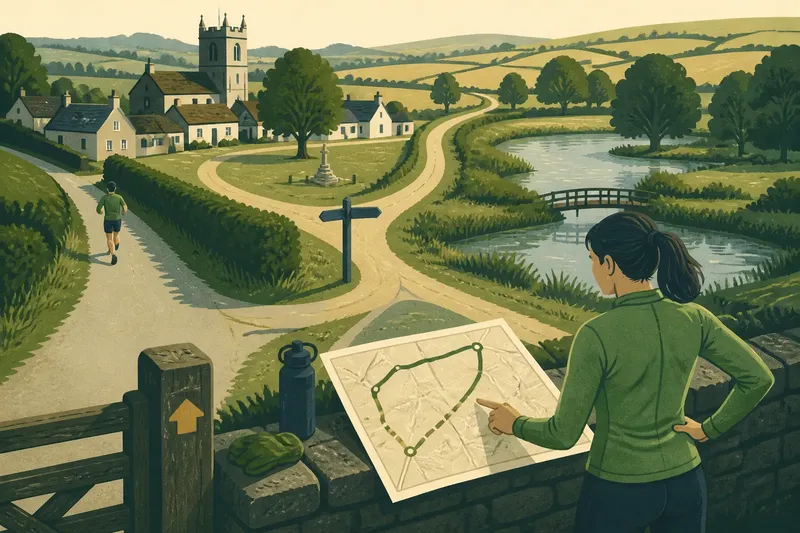
You have a free half-hour before lunch, and the map shows a loop through the fields. A rural running route can look tidy on screen yet leave you with a long, unchanging stretch; a small bend towards a village green might make better use of the time you have.
The best choice depends on what you want from the outing and when you need to be back. A simple route can suit a tight schedule, while a loop with a few recognisable places can make a longer run feel like an exploration.
Is the shortest rural running route the right one?
Sometimes. If you have a firm return time, a direct out-and-back with a clear turning point is easy to plan. With more room, consider whether a loop passes somewhere you would enjoy seeing, such as a churchyard, a village pond or a bend in the river.
Look beyond the line on the map. A route might pass through a farm entrance, skirt a busy road or reach its most appealing stretch just before the turn. Those details can shape the outing more than a small difference in distance.
Choose for the time you have, then let scenery and route shape help settle close calls.
How can scenery make a route feel varied?
Notice how the view changes as you move through the countryside. A run might begin beside cottages, follow a hedge-lined lane and open onto fields; those changing scenes give the outing a natural sequence without requiring a complicated plan.
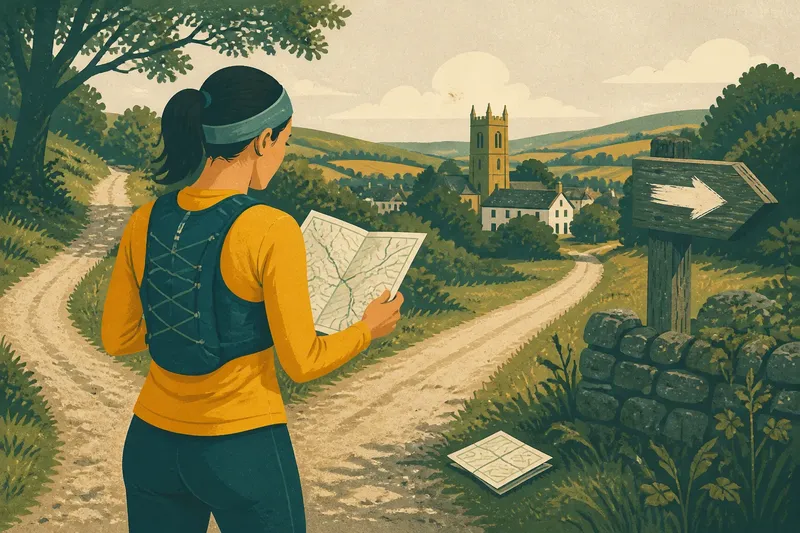
Landmarks can make that sequence easier to remember. A footbridge, a church tower or a distinctive bend in a stream can mark a turning point and help you keep track of where you are. Use a map to check that the landmark is actually beside your route, rather than assuming it will be visible from a distance.
For a relaxed outing, choose a route with one or two places you are glad to pass, rather than adding detours simply to make the route look more elaborate.
Which route shape suits the time I have?
An out-and-back is straightforward: follow a path to a chosen point, then return the same way. It can suit a short run or a route where you want a clear option to turn around early.
A loop brings you back by a different way and can feel more exploratory, but check that its final section leads conveniently to your starting point. A lollipop route combines a shared stem with a loop at the far end; you can shorten it by leaving out the loop if your schedule changes.
Imagine you have forty minutes before collecting a friend from the station. You mark a village green as the turning point on an out-and-back, then identify a small loop beyond it as an optional extension. If the outward leg takes longer than expected, you turn at the green and return directly; if time remains, you take the loop and still have a clear route back.
What should I check before choosing between routes?
How much time do I have?
Check your actual leaving and return times, including any walk to the start. If one route leaves little room for the return, choose the shorter option or set an earlier turning point.
Where are the useful landmarks?
Mark places you can recognise on the ground, such as a bridge or village crossroads. If they are clear and close to the route, use them to guide your turns; if not, choose a simpler route with more obvious junctions.
Does the route have a clear way back?
Trace the return on a paper map or mapping app, rather than assuming a lane joins up. If the route reconnects cleanly, keep the loop; if it ends in a confusing cluster of paths, use an out-and-back instead.
Can I shorten the outing without getting lost?
Look for a junction or landmark where you can turn towards your start. If the shortcut is clear on the map, keep it as an option; if it depends on an uncertain path, plan to turn back the way you came.
Before leaving, make these checks and decide what to do with each result:
- Available time: Check the time you must be home. If the longer route leaves a comfortable return, choose it; otherwise take the shorter route.
- Starting point: Check that the route begins where you will actually set off. If it does, follow the planned line; otherwise revise the start or choose another route.
- Turning point: Check for a recognisable crossroads, bridge or village edge. If one is easy to identify, use it as your turn; otherwise choose an out-and-back with a clearer endpoint.
- Return line: Check that the paths or lanes lead back to your start. If they join up clearly, keep the loop; otherwise return on the outward route.
- Scenery: Check whether the route passes a place you genuinely want to see. If it does, include that section; otherwise avoid adding a detour just to make the route longer.
- Optional extension: Check whether an extra spur reconnects with the main route. If it does, keep it as an optional addition; otherwise leave it out and use the simpler plan.
A paper map or mapping app helps you inspect lanes, paths and landmarks, but cannot show exactly what a stretch feels like on the ground. For an unfamiliar route, keep a simple return option in mind.
How should I choose a route for a relaxed or purposeful run?
For an easy outing, pick a route that is simple to follow and gives you something pleasant to notice along the way. A compact loop beside a village green may suit you better than a long straight lane, even if both fit the time available.
For a purposeful run, choose a shape that helps you keep your attention on the outing. An out-and-back offers a clear turn, while a loop gives you changing landmarks and a different way home. Either can work; decide whether you prefer a familiar return or a little exploration.
If you are new to the area, start with a route marked by obvious landmarks. On a later run, you can adjust one turn or add a short loop once you know how the route connects.
When is a scenic detour worth the time?
A detour makes sense when it fits your schedule and adds somewhere you would like to pass, rather than simply stretching the outing. Check how it reconnects with your route and identify the point where you can leave it out if time is short.
When choosing a rural running route, match its shape to your available time and the places you want to see. A familiar lane may be the sensible choice before a busy afternoon; on a quieter day, a loop past the river could give the run a more exploratory feel.
Before you set off, name one thing that would make the outing feel worthwhile: reaching a particular landmark, trying a new loop or getting home with time to spare. That gives you a simple way to choose between routes without turning a run into a planning exercise.